Artificial intelligence in HR is revolutionizing how HR teams manage talent, making processes more efficient, data-driven, compliant, and effective. From automating tasks to enhancing decision making with predictive analytics, AI is changing the face of human resources. This article will delve into the most impactful ways AI can transform your HR processes.
Uses and Benefits of AI in HR
AI is revolutionizing HR by automating repetitive tasks, analyzing data, predicting outcomes, and assisting in data driven decision-making. AI tools can:
- Reduce human error in payroll and compliance processes
- Lead to better hiring decisions and overall talent management
- Analyze employee feedback and behavioral patterns to help maintain a productive and satisfied workforce
- Predict turnover risks and highlight areas for improvement within the workforce
- Provide reliable insights that enhance overall HR operations
- And much more!
Myriad benefits of AI implementation include enhanced staffing efficiency and training processes, reduced operational costs, and lower turnover.
Furthermore, AI’s ability to operate continuously without fatigue allows it to effectively manage routine HR tasks without interruption. This makes artificial intelligence an incredibly powerful asset for human resource management.
Key AI Technologies in HR
Several key AI technologies are driving the transformation of key HR functions.
Generative AI is increasingly being adopted for tasks such as content creation and personalized communications. This technology can be used for drafting job descriptions, preparing training materials, and generating emails, significantly reducing the time HR teams spend on these activities.
Natural language processing (NLP) is employed to analyze and improve communication strategies. By understanding the nuances of employee feedback—picking up on sentiment and emotion, for example—an HR department can develop more effective engagement and retention strategies.
Machine learning algorithms optimize the recruitment process by assessing candidate fit and predicting their success within the company. They can predict shifts in the workforce, using HR data to help HR leaders plan workforce strategies long before they’re needed.
AI-driven knowledge management systems help HR teams consolidate information. Consolidation makes it easier to access and utilize HR data for better decision-making in candidate relationship management, employee development, human resource management, and other HR departments.
AI Helpdesk Chatbots assist with answering basic employee questions. This frees HR team members from boring, routine tasks and provides consistent and accurate answers to employees. These AI-powered tools are not just about efficiency; they enable HR professionals to focus on higher-value tasks.
The integration of these artificial intelligence technologies is transforming HR departments, making operations more efficient and effective.
Using AI for the Talent Management Life Cycle
AI’s uses in the talent management life cycle are profound, offering assistance with everything from workforce planning to performance reviews. By integrating AI tools for HR departments, organizations can enhance their HR processes at every step of the entire employee lifecycle.
This section will delve into how AI is revolutionizing each stage of talent management, providing HR leaders and talent acquisition professionals with the tools they need to attract, develop, and retain top talent.
Enhance Talent Acquisition with AI
The use of AI in the talent acquisition stage helps HR teams to attract the right candidates more quickly. AI not only speeds up the hiring process, but it ensures consistency and fairness in candidate evaluation.
HR teams will find the use of generative AI tools like ChatGPT are helpful in creating job postings. Quickly draft job descriptions tailored to the role and competencies being targeted. Integrate prompts to use language that targets candidates who share your organization’s values and work culture.
HR AI tools like Textio can then analyze the language in job descriptions and identify potential biases. The tool suggests inclusive wording and removes bias, ensuring fairer and more attractive job postings.
AI hiring software can also help you perform preliminary screenings and even organize interview scheduling. These “smart” tasks significantly reduce the time and resources needed to vet potential candidates.
Generative AI tools can create an AI-generated candidate evaluation rubric to help hiring managers maintain consistency in assessments. This leads to better outcomes in the hiring process.
Ultimately, the use of AI in recruitment processes improves efficiency, helping organizations attract and hire suitable candidates more quickly than conventional methods.
Personal Experience Using AI for Staffing
I’ve been experimenting with AI tools in my own HR work, and the impact has been clear. For example, I recently started using FactoryFix, an AI-powered recruiting platform, and it has saved me a huge amount of time while also creating a smoother candidate experience. The platform automatically reaches out to both passive and active candidates, pre-screens them with customized questions, and now even handles interview scheduling thanks to a recent update.
Beyond recruiting, we’ve also been exploring new HRIS providers, and it’s been fascinating to see how many of them are weaving AI into their platforms. On top of that, I use ChatGPT almost daily, so I can personally attest to the value AI brings to HR workflows. Here are more ways to use AI in HR.
AI in Employee Onboarding
AI can transform an HR department’s employee onboarding process, making it more efficient and personalized, and less likely to send new hires running for the hills.
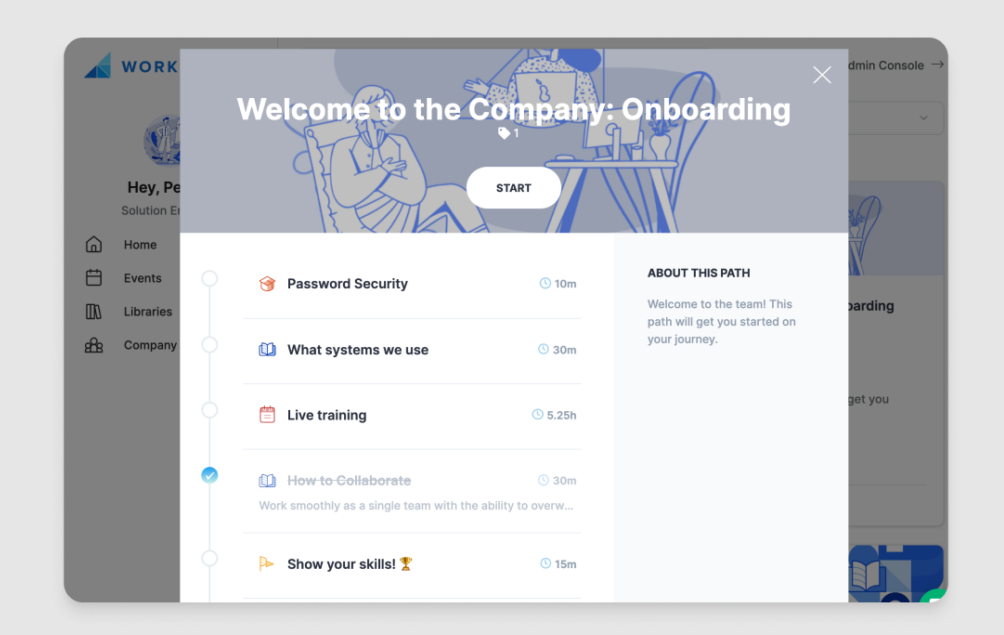
Here are some ways to enhance employee onboarding by using AI:
- Personalize learning experiences by adapting content and training modules based on a new hire’s role requirements and background.
- Create more engaging onboarding experiences by using generative AI to turn boring handouts or slideshows into exciting animations or engaging presentations
- Use policy acknowledgment tracking tools like simplifyIT to ensure that employees sign key documents and complete milestone tasks on time.
AI-driven onboarding platforms like Workramp maximize the use of AI in the onboarding process. These platforms ensure new employees not only learn what they need to know on the job, but are engaged in the process.
The use of AI in onboarding can reduce the time taken to onboard new employees by as much as 53%. In addition, these tools can create a more supportive and personalized experience for each new hire, leading to reduced turnover.
AI-Powered Performance Reviews
Performance reviews are a critical component of talent management, and AI is making them more effective and efficient. Use AI to streamline the performance review process by:
- Analyzing job performance data to highlight key successes, areas of improvement, and opportunities for upskilling.
- Creating performance review documents and questions, including simulated responses.
- Reducing biases and inaccuracies in performance reviews, providing a fairer assessment for employees, leveraging AI-driven insights.
- Conducting post-review evaluations to predict turnover risk and identify opportunities for growth.
- Developing personalized development plans for upskilling and goal-setting.
AI-powered performance reviews don’t require an enterprise-level budget to employ. From a free tool like Venngage to an enterprise solution like beqom, there are numerous AI programs to assist with every stage of a performance review. These tools make this often-dreaded task more painless—and effective—ensuring that employees receive the support they need to grow.
AI for Workforce Planning

Workforce planning is a critical aspect of HR that can benefit immensely from the use of AI.
Predictive analytics allow organizations to anticipate talent needs and employee turnover, making it easier to plan for future staffing requirements. AI workforce planning tools can forecast future staffing needs with remarkable accuracy by analyzing historical data. This enables organizations to adequately prepare for growth and attrition.
AI can identify current and future competency gaps. Identifying these gaps can drive targeted upskilling or reskilling initiatives and training programs. This is particularly important as the workforce landscape evolves. A significant transformation in workforce skills is expected by 2030 according to the World Economic Forum’s 2025 Future of Jobs Report.
AI analytics platforms also offer advantages in developing succession plans, ensuring that organizations are always prepared for future challenges.
The emphasis in workforce planning is shifting from traditional job titles to a focus on skills, driving organizations to deconstruct roles into essential skill sets. While this allows for more versatile workforce deployment and better alignment with business needs, it’s critical to be at the forefront of this change. With the right AI tool for the job, HR leaders can capitalize on this shift for their organization.
Boosting Employee Engagement with AI

Employee engagement is crucial for organizational success, and AI plays a significant role in enhancing their involvement. By providing data-driven insights into employee satisfaction and performance, AI-enabled organizations can create personalized, responsive approaches to employee needs.
Let’s explore how AI can analyze and support employee satisfaction, leverage training and development, and improve employee relations.
Analyzing and Supporting Employee Satisfaction
AI technologies can efficiently analyze vast amounts of feedback to improve workplace experiences and engagement strategies.
For instance, LifeWorks utilizes AI for employee wellness monitoring by continuously analyzing wellness data to identify patterns. This allows HR professionals to proactively address issues like burnout, and provide personalized support to employees
HR teams can use AI to develop employee feedback surveys, which uncover priceless data that can be used to enhance employee productivity and satisfaction.
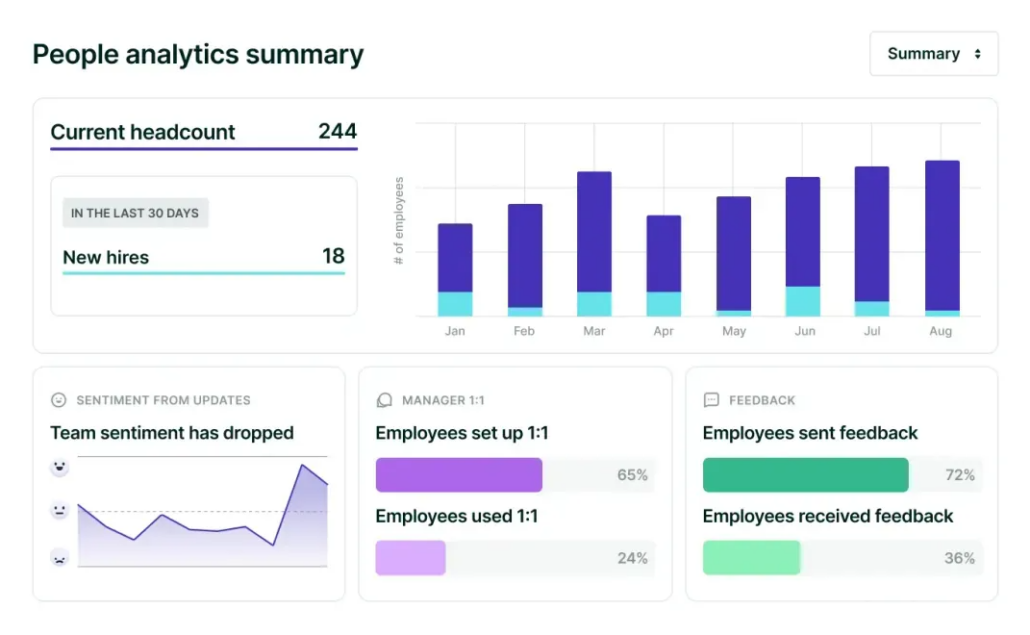
Natural language processing can perform sentiment analysis to understand employee emotions and identify patterns. Tools like Lattice allow even small businesses to gain insights into employee feedback, helping to uncover subtle issues that might otherwise go unnoticed.
Even basic tools like ChatGPT can help HR teams to improve workplace satisfaction. By using information provided from employee feedback, ChatGPT and other LLMs can help develop recognition and reward programs that are actually effective.
It’s essential to address concerns about trust in AI technology and fears of job replacement. Gradual implementation of AI feedback systems, with human managers providing feedback to new employees and AI to those with more experience, can help ease transitions.
Leveraging AI for Employee Development and Training
Career development is increasingly recognized as a key factor in employee engagement and retention. AI plays a crucial role in supporting the workforce and preparing them for future roles.
AI-driven upskilling platforms like Absorb provide personalized learning experiences based on individual employee needs. Using advanced AI, platforms like Absorb create custom learning paths based on competency and goals, so each each employee is upskilling at his or her own pace according to their unique learning style.
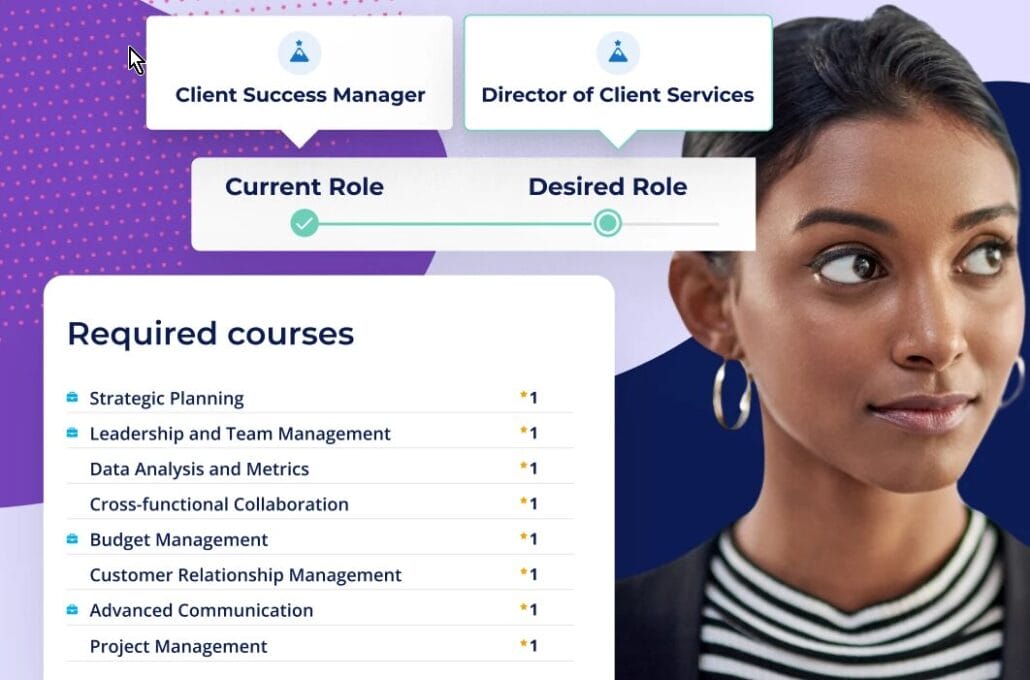
AI also makes the development of training courses less of a chore, using generative AI to do the heavy lifting. Generative AI can help you quickly and easily create training modules to advance employee skillsets in a fun and impactful way. Articulate, for example, leverages AI to develop the courses, add images, and create interactive activities built around the lessons.
By integrating AI into training and development programs, HR teams can ensure that employees receive the support they need to succeed. AI tools enable HR professionals to focus on strategic initiatives, such as identifying top talent and developing targeted training programs, ultimately enhancing the overall employee experience.
Use AI to Improve Employee Relations
AI is increasingly being utilized to assist in mediating disputes and improving employee relations.
Simple generative AI platforms like ChatGPT can help HR professionals with negotiation and coaching by:
- Analyzing data and enhancing impartiality
- Facilitating negotiations by asking probing questions
- Suggesting offers
- Estimating the acceptance probability of offers
- Role-playing scenarios for performance counseling or disciplinary action to prepare HR professionals for difficult conversations with employees or managers
AI can also assist with one of the most challenging HR functions – mediating disputes among employees. You can use AI to successfully navigate inter-office conflict and take emotions out of the equation to:
- Promote empathy among conflicting parties, which is a key aspect of emotional intelligence.
- Simulate creative problem-solving options, allowing involved parties to visualize potential outcomes,
- Offer solutions with fact-based, impartial data.
This innovative approach to mediation can enhance employee relations by providing innovative solutions to complex disputes.
It’s important to remember that AI should complement human decision-making in employee relations and enhance empathy and understanding. AI should not replace the human element.
Streamline Administrative HR Tasks with AI Tools

AI is a game-changer when it comes to streamlining administrative HR tasks. By automating repetitive HR tasks, AI tools enable HR professionals to focus on strategic initiatives and meaningful interactions.
This section will explore how AI helps HR teams develop documents, manage employee records, and reduce errors in payroll and benefits.
Develop Handbooks, Emails, Templates, and More with Generative AI
Generative AI can rapidly create essential HR documents, enabling HR teams to develop handbooks, emails, templates, and more in minutes. AI can:
- Draft or revise employee handbooks and their policies, including leave policies, remote work policies, and code of conduct policies. Then use an AI tool like AirMason to ensure they are up-to-date and compliant with current regulations. This not only saves time but also ensures that the content is accurate and employee-friendly.
- Translate complex legal requirements into clear, understandable language. This is particularly useful for preparing compliance checklists for local, state, and federal HR regulations.
- Draft emails for common HR communications, such as policy updates, reminders, and announcements, streamlining the communication process.
- Generate training outlines for managers and employees, ensuring that training programs are comprehensive and tailored to the organization’s needs.
The options for developing content, documents, templates, and more are limitless with the use of generative AI. Try using a simple AI tool like Microsoft Copilot to get started.
Simplify Employee Data and Records Management
One of the most important routine administrative tasks for HR teams is keeping employee records up to date. AI simplifies this mundane but essential task of employee record-keeping and data management by automating data entry. This ensures that employee information is always accurate and up to date.
From the moment a candidate is hired, AI can extract and upload information from resumes and job applications, significantly reducing the time and effort required for data entry.
Additionally, AI tools like CloudApper hrPad can automatically update employee details when changes are detected in integrated systems. It ensures that the records are always current.
You can use AI search tools for data retrieval to quickly find relevant employee records or policies. HR teams can even conduct compliance audits by identifying missing forms, outdated certifications, or expiring licenses in seconds.
Reduce Errors in Payroll and Benefits
A key use of AI in HR is to reduce errors in payroll processing and benefits administration.
AI detection tools can flag payroll irregularities such as unusually high overtime, incorrect time punches, and meal plan errors. Organizations can promptly address these payroll anomalies and prevent future issues. The tools help ensure that employees are paid accurately and on time, enhancing employee satisfaction and trust, and reducing costly reconciliations.
AI can also simplify tax document preparation by auto-populating tax forms such as W-4s and I-9s with existing data. This not only saves time, but reduces the likelihood of errors, which could result in costly issues down the line.
AI Helpdesk Chatbots, sometimes called AI agents, can guide employees through benefits enrollment, swiftly answering common benefit plan questions and assisting with policy selections. This not only improves the accuracy of benefits administration but also enhances the employee experience by providing timely and accurate information. So much can be accomplished with the help of an ai powered work assistant.
Automating routine payroll and benefit tasks with AI agents and tools enables HR professionals to focus on more strategic activities. This not only improves operational efficiency but also enhances the overall employee experience.
Ethical Considerations of AI in HR

While AI offers numerous benefits for HR, it is essential to consider the ethical implications of its use. AI tools must comply with data protection regulations to ensure responsible management of employee information. This includes safeguarding sensitive employee data and ensuring that AI systems are secure and transparent.
Trust and transparency are crucial when implementing AI for HR solutions. Organizations must use AI responsibly to avoid negative impacts on company culture and employee morale. This involves:
- Clearly communicating how AI tools are used to both employees and applicants
- Ensuring that employees understand the benefits and limitations of AI
- Addressing any concerns employees may have about job security and data privacy.
Regular audits of AI tools are also necessary to ensure ethical use and to identify and mitigate any biases that may affect hiring decisions.
Balancing immediate operational needs with long-term strategic goals is a challenge that organizations must navigate carefully when adopting AI. Your organization should strive to align AI choices with company values and maintain a focus on ethical considerations. You can successfully harness the power of AI while fostering a positive and transparent workplace culture.
Summary
AI in HR is revolutionizing the role of human resources by automating repetitive tasks, reducing costly errors, enhancing decision-making, and even improving employee satisfaction. Artificial intelligence technologies including generative AI, natural language processing, and machine learning all work to streamline HR functions. It’s adoption improves efficiency and enhances overall HR strategy.
From workforce planning and recruitment to onboarding and performance reviews, AI is transforming each stage of the talent management life cycle. It keeps employees engaged, helps them learn, and improves their workplace relationships. AI tools for HR are changing the HR function of human resource professionals for the better—automating routine tasks and reducing errors while giving them more time to focus on higher-level performance management and strategies. This ultimately helps the organization to make the best use of its most valuable resources—it’s people.
If AI systems are implemented responsibly and ethical implications are considered, organizations can fully harness the power of AI and machine learning. This approach helps maintain trust and transparency with employees.
AI offers numerous benefits for HR, from reducing costs and improving staffing efficiency to enhancing employee experiences and retention rates. By embracing AI, HR professionals can create a more dynamic and engaging workplace for everyone.